


How to spotted fake hour meter Furukawa HCR900DS,1000DS,1200DS and Furukawa 9DS,12DS

A guide for used Furukawa drill buyers — by S. Suvit Trading, Furukawa specialist since 1968

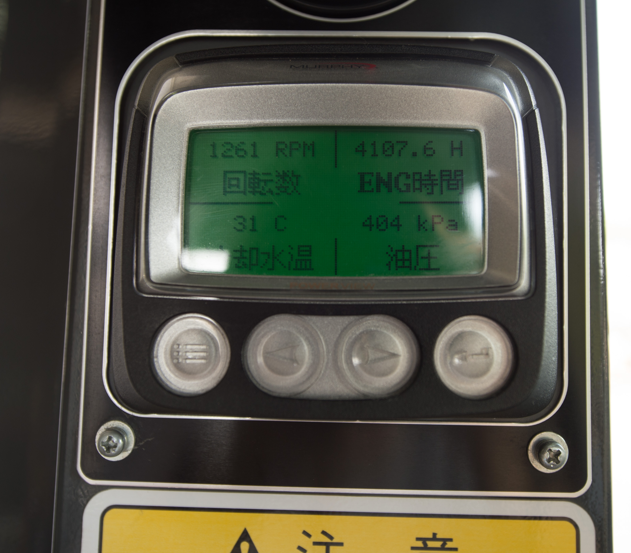
Why fake hour meters matter
The hour meter is the first number any used-drill buyer looks at, because it tells you the real working life of the machine — and lower hours = higher price. That is exactly the incentive for some sellers to falsify the reading downward.
The problem is that a machine with high real hours but a low displayed reading carries hidden repair costs — a drifter near overhaul, worn hydraulic pumps, an engine approaching a major rebuild — while you pay the price of a low-hour machine.
The key principle: the real hours matter more than the number on the dial, and "a well-maintained high-hour machine is usually better than a neglected low-hour one." This article shows you how to prove whether the displayed number is genuine.
Before you inspect: Furukawa drills split into 2 groups, each checked differently
This is the heart of the article, and something most sellers won't tell you — how you detect a fake hour meter depends on whether the engine has an "electronic brain" (ECM).
Show Image
Group A — electronic engines (with ECM): HCR900-DS/DS2, HCR1000-DS/EDS, HCR1200-EDII. These run CAT engines (3126B or C7) or Cummins, which have an ECM (engine control module) storing the true accumulated lifetime hours internally — and this is where the faker gets caught, because ECM hours can only be adjusted upward, never reduced, and only with a dealer password. Even if the dial is rolled back, the ECM still remembers the real hours. Note also that the display panel communicates directly with the ECM — if the display is faulty you cannot read machine status at all, so have it repaired before you buy.
Group B — mechanical engines (no ECM): HCR9-DS, HCR12-DS. These run ISUZU 6BG1 / 6BG1T engines, which are purely mechanical with no ECM and no backup record of hours. The dial is therefore the only evidence — it cannot be verified with electronic tools at all. That makes this group far more exposed to hour-meter fraud, and you must rely on inspecting genuine physical wear. For these machines, hire a specialist to inspect. The inspection principles follow below.
Three ways an hour meter gets falsified
Mechanical rollback — on rolling-digit meters, the unit is removed and the numbers turned back
Meter swap — the original meter is removed and replaced with one showing low hours (or zero)
Digital rollback — on digital displays, tools are used to alter the number, leaving no visible external trace. Detection then depends on the ECM and physical wear — and it will still be caught with CAT ET3
Check 1 — Read the ECM (most accurate, for CAT / Cummins engines)
This is the decisive method. For Group A machines, have a technician with CAT ET (CAT engines) or Cummins INSITE (Cummins) connect to the ECM and read the true accumulated hours.
How to interpret:
ECM much higher than the dial → the dial was rolled back or replaced. Because ECM hours can only increase, never decrease, this is the most direct evidence there is.
A new ECM showing 0 or unusually low hours → the ECM may have been replaced. Ask why and request documentation (a dealer replacing an ECM properly will reprogram the original hours into it).
ECM ahead of the dial by 10–20 hours → normal. The factory test-runs engines before installation. This is not fraud.
Beyond hours, CAT ET also reads the machine history (PSR) — whether it has ever overheated, whether fault codes are logged — which helps you assess true condition at the same time.
⚠️ Important limitation: this method does not work on the HCR9 / HCR12, because the ISUZU engines have no ECM. For those, you must rely on Checks 3 and 4.
Check 2 — Inspect the meter and panel (works on every model)
Look at the meter itself with your own eyes:
Digits out of line or crooked — on a rolling-digit meter, numbers that don't sit in one straight line, or with uneven spacing, mean it was turned back by hand
Scratches, pry marks, screwdriver marks, a broken weather seal around the meter = it has been removed or opened
The meter or panel looks much newer than the rest of the machine = the whole meter may have been swapped
The activation mark isn't turning — Furukawa meters (e.g. the HCR900-DS2) have a small mark that rotates while the engine runs. The manual states that if this mark does not turn, check the meter or the electrical system. If it has been disconnected, the meter stops counting — one way of "freezing" the hours
From the manual: the HCR900-DS2 meter advances one digit per 0.1 hour (6 minutes). Models with a digital display (such as the 1200-EDII, and the 1000-EDS with its IMS system) show the reading digitally — a digital display can be falsified more cleanly, so the ECM is what catches it.
Check 3 — Wear must match the hours (most important for HCR9 / HCR12)
For ISUZU machines where the ECM can't be read — and usable on every model — because wear is hard to fake. Compare the machine's real condition against the displayed number:
Control levers / joystick — worn grips, faded paint, polished handles = heavy use
Seat and cab floor — collapsed seat, floor worn through = high hours
Steering / travel pedals — heavy wear that doesn't match a low reading
Tracks, bushings, rollers — wear tracks travel hours
Drifter condition — the manual recommends overhauling the drifter every ~1,000 hours. If the drifter has been overhauled several times but the reading is low = suspicious
Grime and fading on the engine, hoses, hydraulic lines — high-hour machines accumulate deposits and faded paint that don't match a low reading
The rule: if the machine "looks like it has been through a war" but shows low hours — believe the condition, not the number.
Check 4 — Documents and history
Service record book — hours are normally logged at each service. Look for gaps or readings that go backwards (hours in records must always move forward)
Oil-change stickers/records — compare the hours written there against the dial
Import papers / ownership history — machines imported from Korea or Japan may carry an original hours record
Ask a CAT dealer — some CAT engines have historical hour readings logged by technicians (SIMS), tied to the serial number
In depth: inspecting the HCR9 / HCR12 without an ECM
This group (ISUZU 6BG1 / 6BG1T engines) is the easiest to falsify and the hardest to catch, because there is no ECM to confirm against. So the inspection weight must fall on physical evidence. Work through the following:
Drifter (HD609 on the HCR9 / HD709 on the HCR12) — request the overhaul history. The manual recommends overhaul every ~1,000 hours. If the drifter has been through several overhauls but the reading is low = the number isn't real
6BG1 / 6BG1T engine — being mechanical, its true condition shows: open the oil filler while running and look for blow-by (smoke pushed out = worn rings/liners = high hours), check exhaust smoke and accumulated oil deposits
Hydraulic pumps — test drilling and feed force. Abnormally weak against a low reading = suspicious
Tracks, bushings, rollers — measure wear and compare to the travel hours it should have
The point most people miss — is the meter original from the factory, or fitted later? If the meter was replaced or newly installed, the count starts from the date of fitting, not the machine's true life. Look for new wiring, fresh mounting marks, or a meter of a different brand from the original panel
Summary for the HCR9/12: when electronic verification isn't possible, apply the rule "believe the condition, not the number" strictly. If there is no history documentation at all, assume the reading may not be genuine and negotiate the price on actual condition.
Don't confuse this: meter "rollover" is not fraud
There's another situation that causes misunderstanding — rollover, which is a normal meter limitation, not cheating:
Meters with few digits (e.g. 4 digits + one decimal = maximum 9,999.9 hours) return to 0000.0 by themselves once full and start counting again.
Example: a 1998 machine showing 633 hours — it's virtually impossible for a 25-year-old machine to have run only 633 hours. In reality the meter has completed one full cycle = 9,999.9 + 633 ≈ 10,633 real hours.
The difference is intent: rollover is a natural limitation of the meter, not fraud — but a dishonest seller will present the post-rollover number as low hours. To catch it, compare the reading against the machine's age (year of manufacture). If it doesn't add up, treat it as suspect.
What a fake hour meter actually costs you
Falsified hours aren't just "paying a bit too much" — they mean buying a repair bill that's already on its way without knowing it. Look at the real maintenance intervals from the Furukawa manuals:
Periodic service intervals: every 50 / 250 / 500 / 1,000 / 2,000 / 3,000 hours
Drifter overhaul: every ~1,000 hours
Engine: both the HEUI system (CAT) and the ISUZU engines have major service points tied to accumulated hours
Example: suppose the machine has really run 12,000 hours but shows 3,000
You pay the price of a 3,000-hour machine (which is higher) for one that has actually run 12,000 hours (close to CAT HEUI injector replacement on the 900/1000-DS)
The drifter may be due for overhaul immediately
The engine is approaching a major rebuild (for ISUZU engines the overhaul cost is roughly THB 100,000 when the block is intact)
Pumps and the hydraulic system are worn to the real hours
Altogether, the price difference plus the repairs that follow immediately can run to several hundred thousand baht more than expected — which is why spending 20–30 minutes inspecting before you buy is the best value there is.
Conclusion
Detecting a fake hour meter on a Furukawa depends mainly on the engine:
CAT / Cummins machines (900, 1000, 1200) — have an ECM storing true hours that cannot be reduced → reading the ECM is the decisive check. If the ECM is higher than the dial, the reading has been falsified.
ISUZU machines (HCR9-DS, HCR12-DS) — no ECM → you must rely on genuine wear and documentation, and take extra care.
Whatever the model, the same principle applies: don't trust the number on the dial alone — always compare it against the machine's condition and its documents. A well-maintained high-hour machine is usually better value than a low-hour machine that was falsified and neglected.
About this article
S. Suvit Trading Ltd., Part. has imported, overhauled, and serviced Furukawa hydraulic crawler rock drills since 1968. We inspect used drills for our customers, including ECM readings, wear assessment, and drifter inspection.
If you are about to buy a Furukawa drill — including one you're buying elsewhere — we're glad to help verify the hour meter and the true condition before you decide, so you don't pay low-hour money for a high-hour machine.
S. Suvit Trading Ltd., Part. 704 Charoen Rat Road, Khlong San, Bangkok 10600 svtrade.com

Comments